8,750-hectare project primed for rapid advancement
Three highly elevated critical elements on project (REE, Nb, & P)*
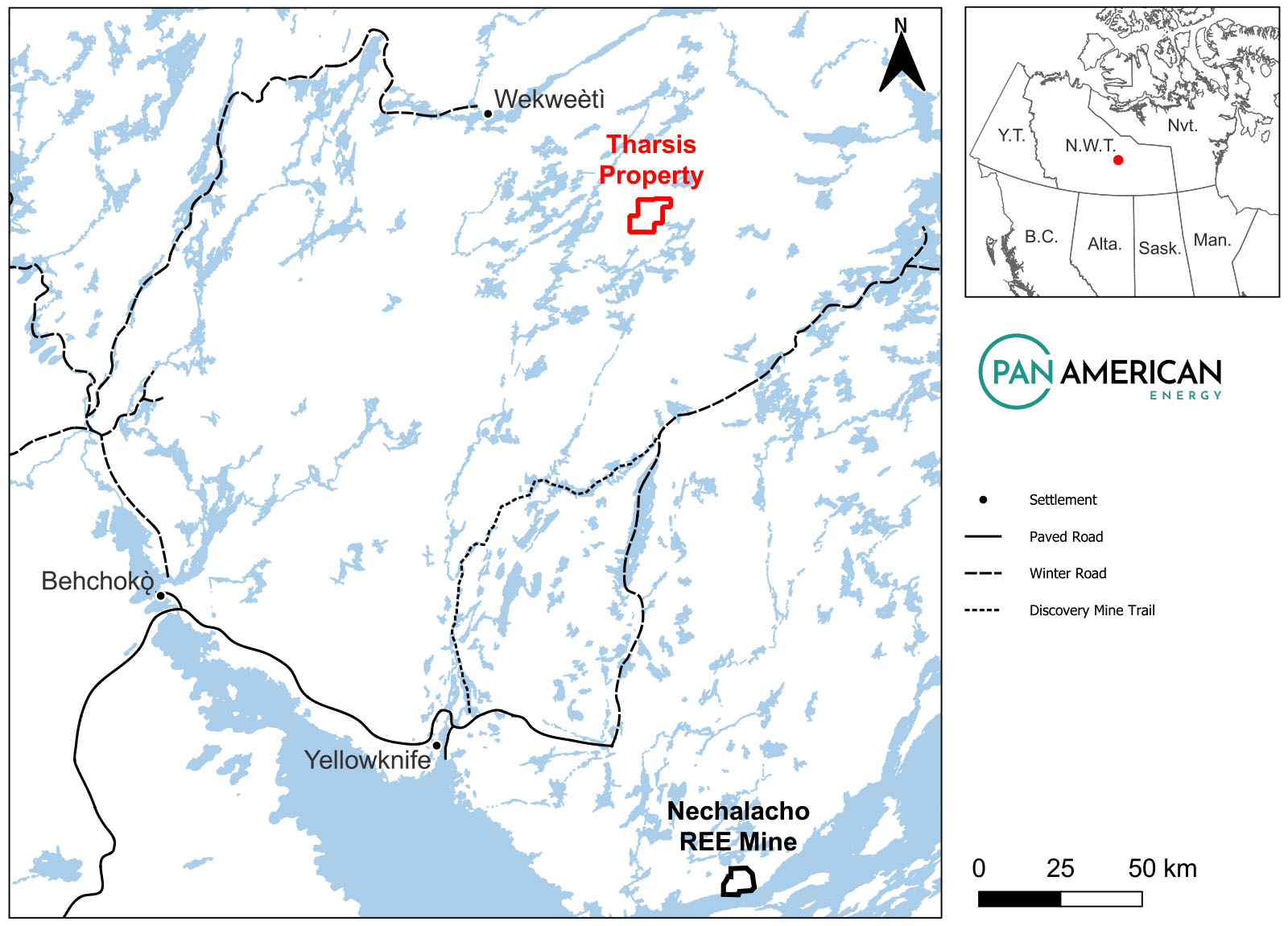
Located in the Northwest Territories of Canada, 170 km northeast of the capital city of Yellowknife.
Situated 200 km from Canada’s only producing rare earth project**
Tharsis has the potential to join the newly created rare earth supply chain and provide material to meet domestic demand.
Access to the property is currently achieved by floatplane in the summer, by ski-plane in the winter, or by helicopter year-round.
* Rare Earth Elements, Niobium & Phosphorus ** Proximity to Canada’s only producing rare earth project is not necessarily indicative of the mineralization on the Tharsis Project
Click image to enlarge
Click image to enlarge
Regional Geology
The Slave Province is a Late Archean craton in the northwestern Canadian Shield, spanning across the Northwest Territories and Nunavut.
The geologic region is made up of a complex assemblage of several geologic terranes, including prevalent granitoid units and meta-sediments with enclaves of various volcanic packages.
The regional geology hosts a variety of current and past producing mines, including the Nechalacho REE project.
* Rare Earth Elements, Niobium & Phosphorus
Tharsis Project Geology
The Squalus Lake Alkaline Complex (SLAC) is a Proterozoic intrusion dated to be ~2,180 million years old.
Carbonatite dykes are observed surrounding the shoreline of Squalus Lake.
The SLAC is situated along a prominent structural feature known as the Phoenix Fault.
* Rare Earth Elements, Niobium & Phosphorus
Click image to enlarge
Click image to enlarge
Tharsis Deposit Model
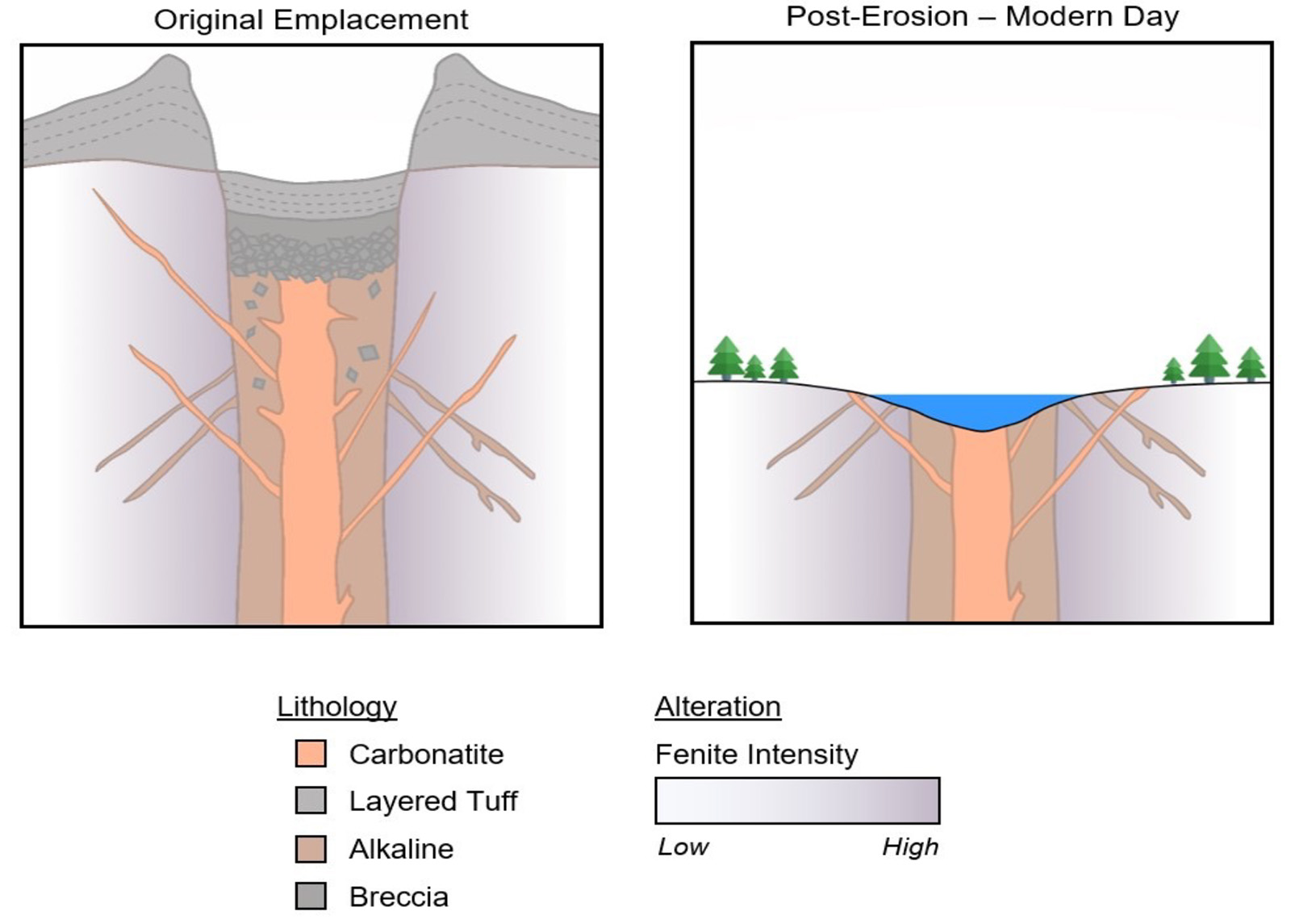
During erosion, carbonatite rocks are more susceptible to erosion than surrounding granitic rocks, creating a water-filled depression on the modern landscape.
Off-shooting carbonatite dikes can be found outcropping near the shoreline of the lake, presenting an opportunity to test mineralization that represents the underlying body.
* Rare Earth Elements, Niobium & Phosphorus
Tharsis Magnetic Signature
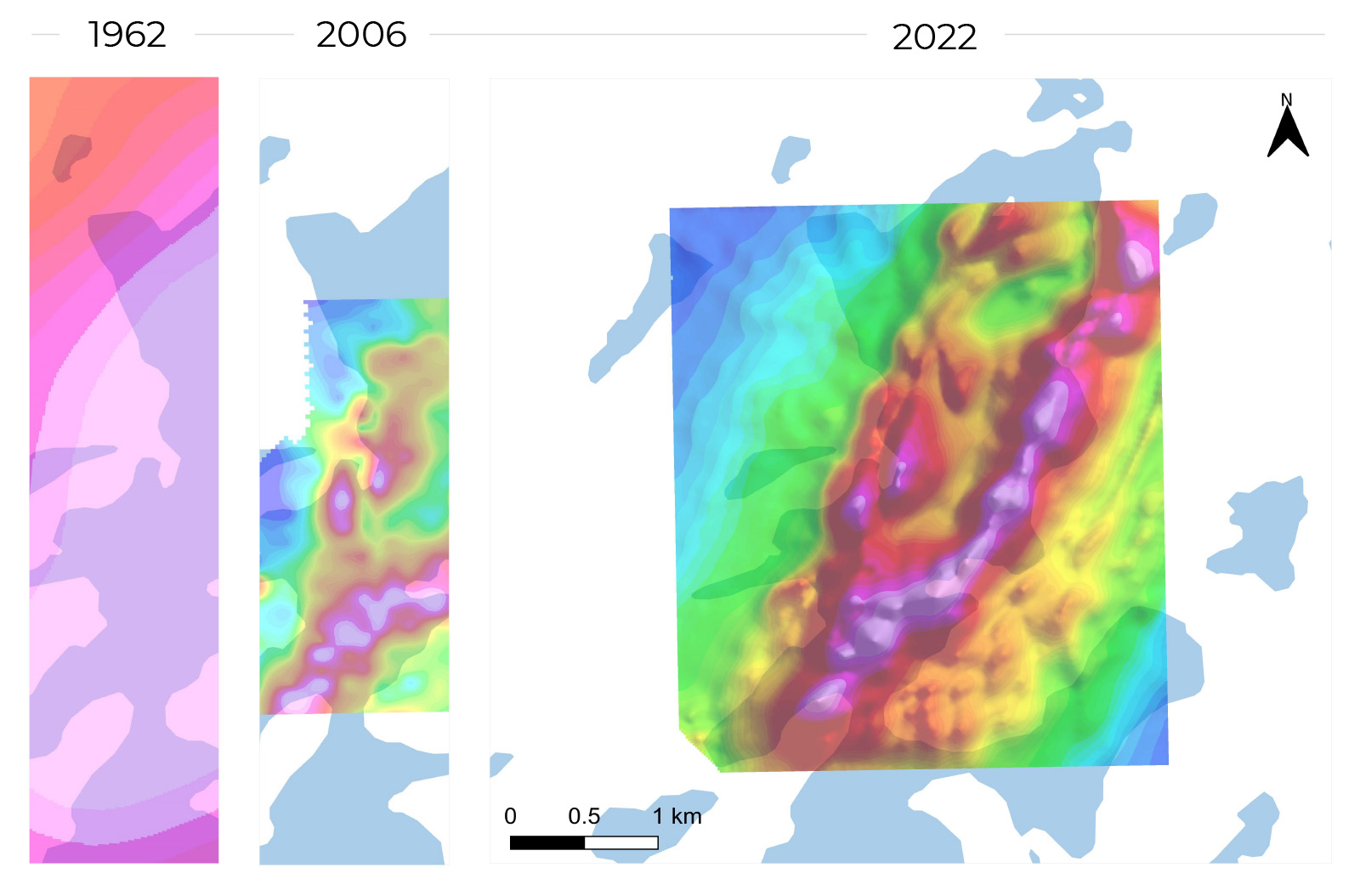
Magnetic surveys performed in 1962, 2006, and 2022 confirm the presence of a magnetic ring structure beneath Squalus Lake.
The magnetic ring is hypothesized to correspond with a magnetic ferro-carbonatite lithological unit.
Rare earth mineralization often corresponds to the weaker magnetic cores in the middle of the structure, which are the units emplaced latest in the magmatic sequence.
Niobium is theorized to correspond with the magnetic high ring structure.
Click image to enlarge
Click image to enlarge
The scientific and technical content of this section has been reviewed, verified, and approved by Jared Suchan, Ph.D., P.Geo., Technical Advisor at the Company, and a “Qualified Person” as defined by National Instrument 43-101.
Rare Earth / Grade
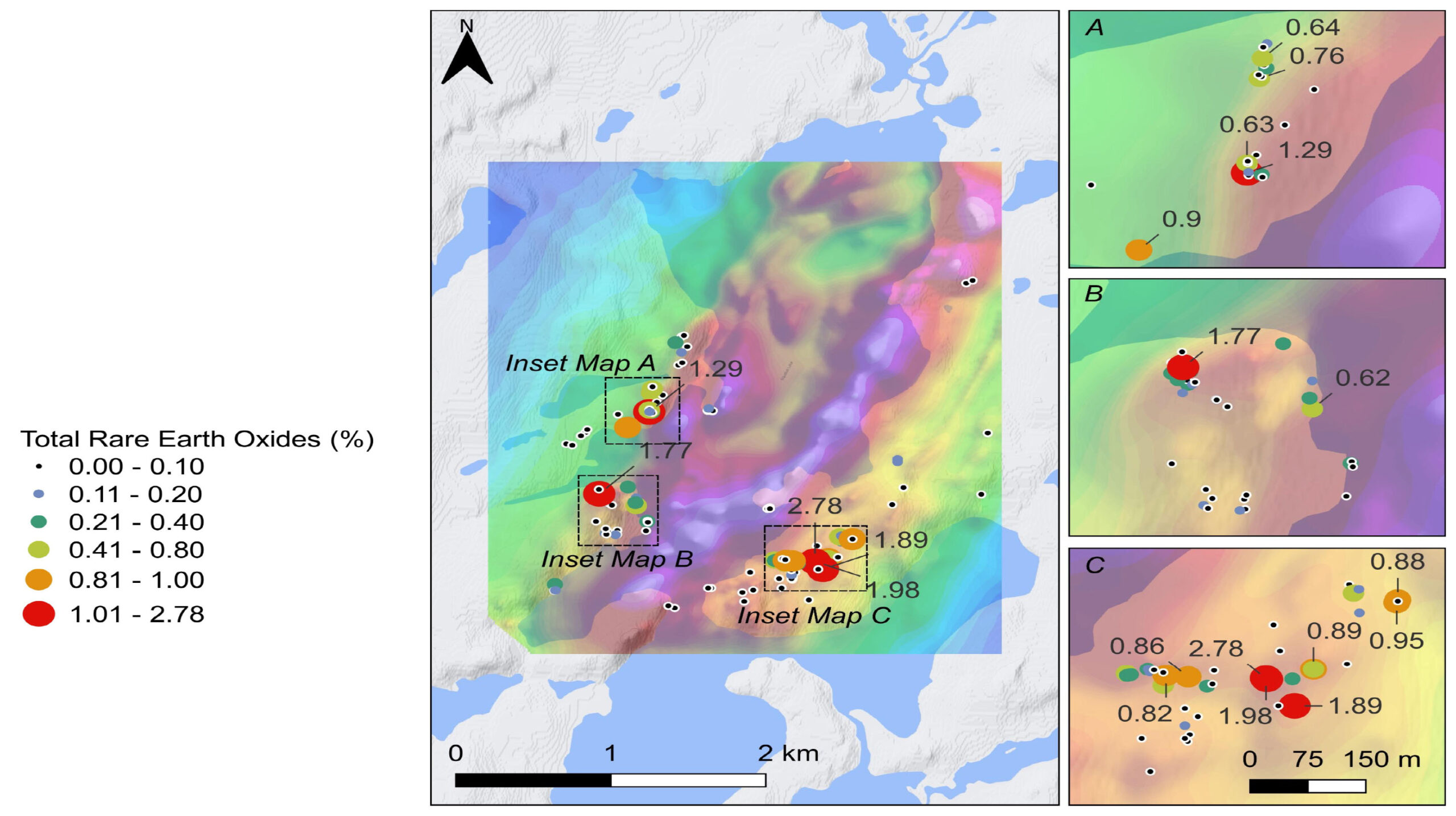
Considering rare earth grades >0.5% TREO in the database (n = 18):
Total rare earth oxides TREO1 Average sample 1.09% TREO Best sample has 2.78% TREO